
Medicare Diabetic Supplies Coverage List: 2026 Guide
See the full Medicare diabetic supplies coverage list for 2026, including Part B and Part D rules, and learn how to get supplies with $0 upfront.

By Marlene O’Hara
Compare health plans
Finding plans in your area…
Managing diabetes requires a steady supply of testing strips, monitors, and other essentials, but keeping those supplies stocked can get expensive. If you are on Medicare, you might wonder which diabetic items are actually covered and what you will pay out of pocket. The good news is that Medicare covers a wide range of diabetic supplies, but the details matter. This guide breaks down the Medicare diabetic supplies coverage list, explains the rules under different parts of Medicare, and shows you how to minimize your costs while staying fully stocked.
What Diabetic Supplies Does Medicare Cover?
Medicare covers diabetic supplies under two main pathways: Medicare Part B (medical insurance) and Medicare Part D (prescription drug coverage). Part B generally covers durable medical equipment (DME) and certain self-testing supplies, while Part D covers medications and some non-DME items like certain needles and syringes. Understanding this split is the first step to avoiding surprise bills.
Here is the core Medicare diabetic supplies coverage list under Part B:
- Blood glucose testing strips and lancets
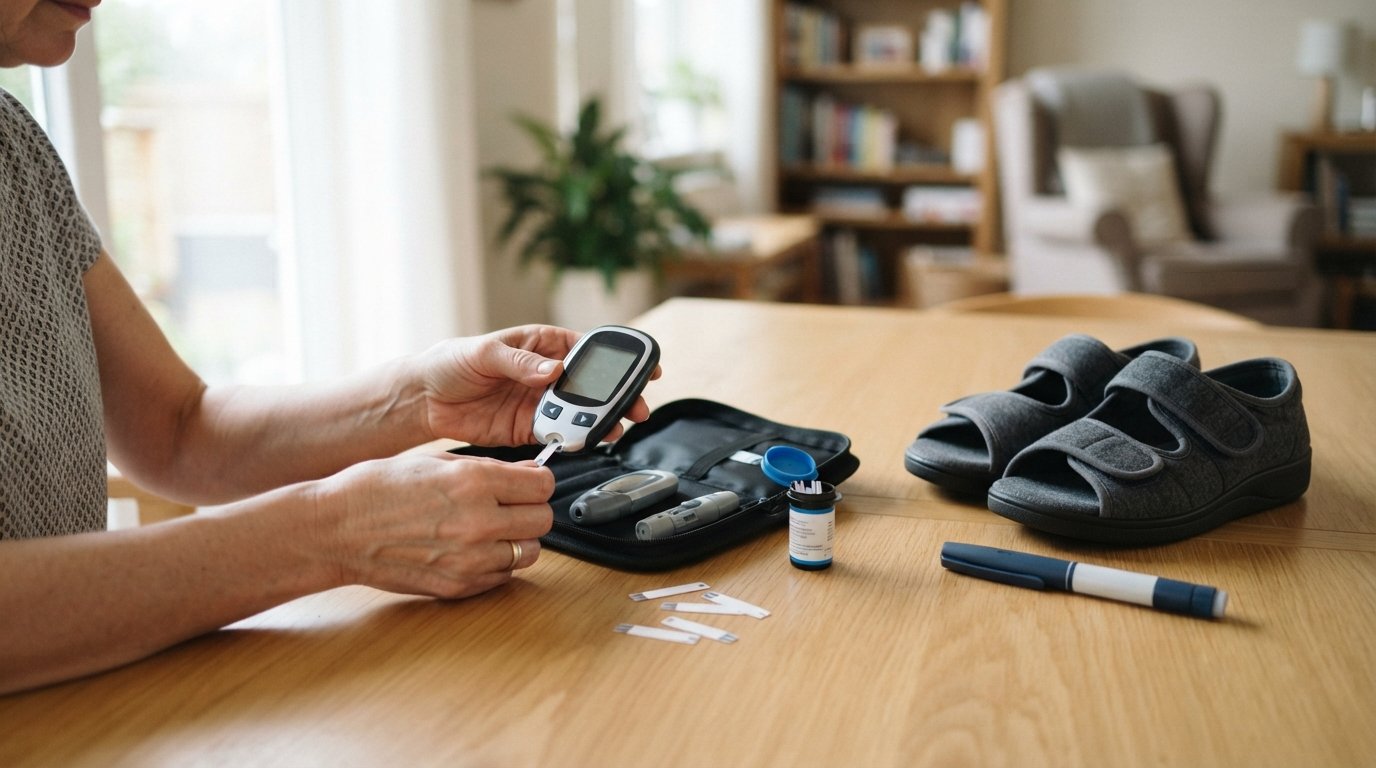
- Blood glucose monitors (meters) and continuous glucose monitors (CGMs) when medically necessary
- Insulin pumps and related supplies, if you meet coverage criteria
- Therapeutic shoes or inserts for those with severe diabetic foot disease
- Diabetes self-management training (DSMT) to help you manage your condition
Part D, on the other hand, covers medications you inject yourself, including insulin, and may cover needles, syringes, and alcohol swabs. However, under the Medicare Prescription Drug Improvement and Modernization Act, insulin costs are capped at $35 per month for Part D plans in 2026. It is critical to check your specific plan's formulary, because coverage details vary by insurer and plan tier.
You should also note that Medicare Advantage plans (Part C) must cover everything Original Medicare covers, but they can set their own cost-sharing and network rules. Many Advantage plans add extra benefits like free glucose monitors or expanded CGM coverage, so reviewing your plan's summary of benefits is essential.
Part B Coverage Rules for Diabetic Testing Supplies
Medicare Part B covers blood glucose testing supplies when you have diabetes and a doctor certifies that you need them. The key is that you must obtain these supplies from a Medicare-enrolled supplier that accepts assignment, meaning the supplier agrees to accept Medicare's approved amount as full payment. If you use a non-enrolled supplier or one that does not accept assignment, you could face higher costs or no coverage at all.
Under Part B, you pay 20% of the Medicare-approved amount for your testing supplies after you meet your Part B deductible, which is $257 in 2026. This applies to monitors, strips, and lancets. However, if you have a Medigap policy (Medicare Supplement Insurance), it may cover your coinsurance and deductible, potentially bringing your out-of-pocket cost to $0. If you have Medicare Advantage, your copay for supplies is often lower, sometimes $0 for preferred in-network suppliers.
For continuous glucose monitors (CGMs) like Dexcom or FreeStyle Libre, Medicare covers them if you have diabetes and your doctor documents that you test your blood sugar four or more times a day and require insulin therapy. You also need a face-to-face visit with your doctor within six months before the first CGM order. Coverage includes the sensor, transmitter, and receiver, but you typically pay 20% of the approved amount after the deductible.
Insulin Pump Coverage Under Part B
Insulin pumps are considered durable medical equipment, so Part B covers the pump itself as well as the insulin used in the pump. The pump must be prescribed by your doctor and deemed medically necessary, usually for patients with type 1 diabetes or those with type 2 who have poor glucose control on multiple daily injections. Medicare covers the pump, its supplies (like infusion sets and reservoirs), and the insulin, but you pay 20% of the Medicare-approved amount for the pump and supplies after meeting the Part B deductible.
One important nuance: if you use an insulin pump, the insulin is covered under Part B, not Part D, because it is administered through the pump. This means you do not use your Part D benefit for pump insulin, and your costs follow Part B rules. If you use injectable insulin via syringes or pens, that insulin falls under Part D, where the $35 monthly cap applies.
Part D Coverage for Diabetic Medications and Supplies
Medicare Part D plans cover prescription drugs you self-administer, including insulin (unless used in a pump), glucagon emergency kits, and medications like metformin or SGLT2 inhibitors. Some Part D plans also cover diabetic testing supplies if you use them in conjunction with insulin, but this is not universal. Check your plan's formulary to see which supplies are included and what tier they fall on, as higher tiers mean higher copays or coinsurance.
In 2026, thanks to the Inflation Reduction Act, all Part D plans must cap out-of-pocket drug costs at $2,000 per year for covered medications. This cap includes insulin, so even if you take multiple expensive drugs, you will not pay more than $2,000 annually for Part D-covered drugs. Additionally, the Medicare diabetic supplies coverage list under Part D often includes:
- Insulin pens and vials (with a $35 monthly copay cap)
- Syringes, needles, and alcohol swabs (if your plan includes them)
- Glucagon emergency kits
- Oral diabetic medications
- Test strips for those who require frequent testing due to insulin use
Because Part D plans are offered by private insurers, each plan has its own formulary and cost structure. When comparing plans during Annual Enrollment (October 15 to December 7), focus on the total estimated costs for your specific prescriptions and supplies, not just the monthly premium. Use Medicare's plan finder or work with a licensed agent to model your drug costs accurately.
Medicare Advantage Plans and Diabetic Supplies
Medicare Advantage (Part C) plans replace Original Medicare and are required to cover all Part A and Part B services, including diabetic testing supplies. However, Advantage plans often use networks of preferred suppliers and pharmacies, and they may require prior authorization for certain items like CGMs or insulin pumps. If you stay in-network and follow plan rules, your copays are typically lower than Original Medicare's 20% coinsurance.
Many Advantage plans include additional diabetic benefits not covered by Original Medicare, such as free glucose meters, reduced copays for test strips, or even over-the-counter allowances that can be used for diabetic supplies. Some plans offer $0 copays for mail-order supplies, which can save you time and money. Always review the plan's Evidence of Coverage (EOC) document to understand exactly what is covered and what your cost-sharing will be.
For example, a popular Medicare Advantage plan might cover a standard glucose meter at $0 and charge a $10 copay for a 90-day supply of test strips, while Original Medicare would require you to pay 20% of the approved amount for the same strips. If you use a CGM, Advantage plans often have lower copays for sensors, but you must use an in-network DME supplier. Before enrolling, verify that your preferred pharmacy and DME supplier are in the plan's network.
If you are considering a Medicare Advantage plan, our guide on Medicare coverage for diabetic supplies explains how Advantage plans can offer more comprehensive coverage than Original Medicare for diabetes management.
How to Get Diabetic Supplies With $0 Upfront Costs
No one wants to pay hundreds of dollars upfront for diabetic supplies, especially on a fixed income. The good news is that with the right coverage, you can often get supplies with $0 upfront. Here are practical steps to achieve that:
- Enroll in a Medigap plan (Plan G or Plan N) if you have Original Medicare. Medigap covers your Part B coinsurance (20%) and may cover the deductible, depending on the plan. Plan G, for example, covers the Part B deductible after 2026? No, Medigap plans sold to new enrollees cannot cover the Part B deductible, but they cover all coinsurance, which means you pay $0 for covered supplies after your deductible is met.
- Choose a Medicare Advantage plan with $0 copays for diabetic supplies. Many HMOs and PPOs offer $0 copays for standard test strips and lancets if you use preferred pharmacies or mail order.
- Use Medicare-enrolled suppliers that accept assignment to avoid balance billing. This ensures you only pay the Medicare-approved amount, and if you have secondary coverage, you may owe nothing.
- Check for Extra Help programs if your income is limited. Extra Help lowers Part D premiums and cost-sharing, potentially reducing your insulin copay to as little as $0.
- Ask your doctor for a 90-day supply to reduce per-fill dispensing fees and qualify for mail-order discounts.
By layering these strategies, many beneficiaries pay nothing at the point of service. For instance, if you have Original Medicare with a Medigap Plan G, you pay your annual Part B deductible once, then your Medigap plan pays the remaining 20% coinsurance for all covered diabetic supplies for the rest of the year. That means your test strips, lancets, and even CGM sensors may cost you $0 after you meet the deductible.
If you are on a Medicare Advantage plan, check if your plan offers a $0 copay for a 90-day supply of test strips through a preferred mail-order pharmacy. Many plans do, and this can eliminate your upfront costs entirely while ensuring you never run out.
Coverage Gaps and How to Avoid Them
Despite the robust coverage, some diabetic supplies are not covered by Medicare. These include items considered convenience items or non-essential, such as:
- Insulin pens that are not medically necessary (some plans cover them, but not all)
- Glucose tablets or gels for treating low blood sugar
- Over-the-counter (OTC) blood pressure monitors (unless prescribed and covered under Part B)
- Diabetic socks or compression stockings (unless you have a specific foot condition)
- Artificial sweeteners or diabetic foods
To avoid surprise bills, always confirm coverage before ordering. Ask your supplier for a written estimate that includes the Medicare-approved amount, what Medicare pays, and what you owe. If you have Medicare Advantage, call the plan's customer service to verify coverage and network status. Also, be wary of suppliers that call you offering "free" supplies; these are often scams that bill Medicare for items you never ordered.
Another common gap involves therapeutic shoes. Medicare covers one pair of custom-molded shoes or extra-depth shoes per calendar year, plus three pairs of inserts, if you have diabetes and meet specific criteria like a history of foot ulcers or neuropathy. However, you must obtain them from a podiatrist or qualified supplier who participates in Medicare, and the shoes must be prescribed by a doctor. If you need them, talk to your doctor early, because the paperwork can take time.
Maximize Your Coverage and Save Money
To truly maximize your Medicare diabetic supplies coverage, you need to take a proactive approach. Start by reviewing your current coverage during the Annual Enrollment Period (AEP) each fall. Even if you are happy with your plan, costs and formularies change yearly, so what worked in 2025 may not be the best in 2026. Use the Medicare Plan Finder or consult a licensed agent to compare plans based on your specific diabetic supply needs.
Consider consolidating your supplies through a single mail-order pharmacy that participates in your plan's network. This often reduces costs and ensures automatic refills, so you never miss a shipment. Also, ask your doctor to prescribe the exact quantity you need; Medicare covers a maximum of 100 test strips per 30 days for non-insulin users (up to 300 per 90 days) and up to 300 per 30 days for insulin users if medically necessary. Do not order more than you need, as Medicare may deny payment for excessive quantities.
Finally, stay informed about changes to Medicare coverage. For instance, in 2026, the Part B deductible is $257, and the Part D out-of-pocket cap is $2,000. These numbers affect your overall costs. If you are considering switching to a Medicare Advantage plan or adding a Medigap policy, our platform at NewHealthInsurance can help you compare options side by side. You can also call 833-203-6742 to speak with a licensed agent who can answer questions about diabetic supply coverage and find a plan that fits your budget.
Remember, the Medicare diabetic supplies coverage list is designed to help you manage your condition safely, but it is only as good as the plan you choose. By understanding the rules, checking networks, and reviewing your coverage annually, you can keep your supplies flowing and your costs low.
Diabetes management does not have to be financially overwhelming. With the right knowledge and plan, you can get the supplies you need without breaking the bank. Take the time to verify your coverage, explore your options during enrollment, and always ask about lower-cost alternatives like mail order or generic brands. Your health and your wallet will thank you. NewHealthInsurance
Compare health plans
Finding plans in your area…