
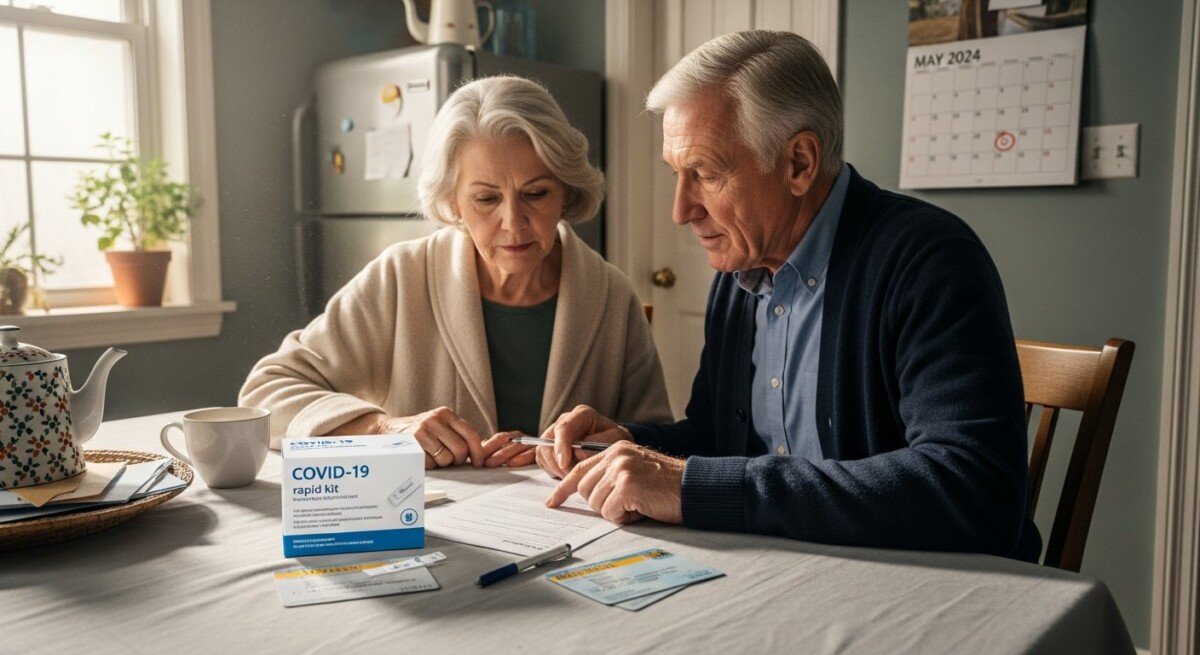
Is Medicare Still Paying for COVID Tests in 2024?
Find out if Medicare is still paying for COVID tests under current rules. Call 833-203-6742 for personalized guidance on your coverage.

By Eliza Monroe
Compare health plans
Finding plans in your area…
For millions of Americans on Medicare, the rules around COVID-19 testing coverage have shifted significantly since the public health emergency ended. If you’re wondering, “Is Medicare still paying for COVID tests?” the answer is nuanced. While Medicare continues to cover certain COVID-19 tests, the era of guaranteed $0 cost tests for everyone is largely over. Understanding the current landscape is crucial to avoid unexpected bills and ensure you can access the diagnostics you need. This guide breaks down exactly what Original Medicare (Parts A and B) and Medicare Advantage plans cover, outlines your potential costs, and provides actionable steps to get tested without financial stress.
The End of the Public Health Emergency: A Major Shift
The official conclusion of the federal COVID-19 Public Health Emergency (PHE) on May 11, 2023, triggered substantial changes to how Medicare pays for COVID-19 services, including testing. During the PHE, Congress passed laws requiring broad coverage of tests with no cost-sharing. This created a familiar and accessible system for beneficiaries. Post-PHE, Medicare reverted to its standard coverage rules, which are dictated by statute and are more restrictive. This shift means coverage is no longer universal or automatic for all test types. The Centers for Medicare & Medicaid Services (CMS) now treats COVID-19 testing similarly to other diagnostic tests, with coverage dependent on the reason for the test, the ordering provider, and the setting where the test is performed. Navigating this new normal requires a clear understanding of these distinct categories.
Original Medicare Coverage for COVID-19 Tests
Original Medicare, which includes Part A (hospital insurance) and Part B (medical insurance), handles COVID-19 test coverage under specific guidelines. Part B is primarily responsible for covering outpatient tests ordered by a doctor.
Medicare Part B: Lab-Processed Tests (PCR and Antigen)
Medicare Part B will cover FDA-approved COVID-19 diagnostic tests, such as PCR and rapid antigen tests, when they are ordered by a physician or other authorized healthcare provider who is treating you. This is the most critical point: the test must be medically necessary based on your symptoms, suspected exposure, or as part of a treatment plan. If you simply want a test for travel, work, or general peace of mind without a provider’s order, Medicare will not pay. When covered, you typically pay nothing for the test itself if your healthcare provider accepts Medicare assignment. The provider bills Medicare directly. However, you may have cost-sharing related to the office visit or assessment where the test was ordered. For detailed insights on how Medicare covers other essential services, you can explore our article on Medicare Part A fees and coverage rules.
Over-the-Counter (OTC) At-Home Tests
This is one of the most significant changes. During the PHE, Medicare beneficiaries could get reimbursed for up to 8 over-the-counter at-home tests per month. That program ended with the PHE. As of now, Original Medicare does not cover or provide reimbursement for at-home COVID-19 tests that you purchase at a pharmacy, online, or in a store. You must pay the full retail price out-of-pocket. Some Medicare Advantage plans (Part C) may offer an allowance for OTC tests, but this is a plan-specific benefit, not a federal Medicare requirement.
Medicare Advantage Plan Coverage for COVID Tests
Medicare Advantage plans (Part C) are required to cover everything that Original Medicare covers, but they have flexibility in how they provide additional benefits. This means all plans must cover provider-ordered diagnostic tests under the same terms as Part B. However, many plans have chosen to extend more generous COVID-19 testing benefits to attract and retain members. It is essential to check your plan’s Evidence of Coverage (EOC) or Summary of Benefits document. Common extra benefits might include:
- Coverage for a certain number of over-the-counter at-home tests per month or quarter, either mailed directly to you or available through a plan-sponsored catalog.
- $0 cost-share for both the test and the associated provider visit, even beyond Original Medicare requirements.
- Access to a broad network of retail testing sites with simplified billing.
Because these benefits vary, you must contact your plan directly to understand your specific coverage. For those struggling with plan costs, understanding all available options is key, as discussed in our resource on getting help with Medicare premiums.
Where You Get Tested Impacts Your Cost
The setting of your test is a major factor in determining your out-of-pocket expense. Here is a breakdown of common testing locations and how Medicare coverage applies.
Doctor’s Office or Clinic: If your doctor orders a test during a visit, Medicare Part B typically covers 100% of the Medicare-approved amount for the test itself. You are responsible for the Part B deductible (if not yet met) and 20% coinsurance for the office visit. Many providers will send the test sample to an external lab.
Independent Laboratory: If your provider sends you to a dedicated lab (like Quest Diagnostics or LabCorp) with an order, Medicare Part B usually covers the full cost of the lab-processed test. You should owe $0 for the test if the lab accepts assignment. There is no cost-sharing for the clinical lab service itself under Part B.
Hospital Outpatient Department: Testing in a hospital outpatient setting is also covered under Part B. You may owe a copayment for the hospital outpatient visit.
Urgent Care Center: Coverage at urgent care is similar to a doctor’s office visit. Part B covers the test, but you are responsible for the urgent care visit copayment or coinsurance.
Pharmacy with Clinical Services: Some pharmacies have clinics where a licensed professional can order and administer a test. If the pharmacy’s clinical professional orders the test based on an assessment, Part B may cover it. A simple purchase of an OTC test off the shelf at the same pharmacy is not covered.
At Home (Via Provider-Ordered Kit): Some healthcare providers may order a test kit to be mailed to your home, which you then self-administer and mail back to a lab. These are considered laboratory tests, not OTC tests, and are generally covered by Part B if ordered by a provider for a medically necessary reason.
Potential Costs and How to Minimize Them
Even with Medicare coverage, you could face out-of-pocket costs. The primary sources are the Part B annual deductible (which resets each year) and the 20% coinsurance for the provider visit that leads to the test order. To minimize your costs, always ensure your provider or lab accepts Medicare assignment. Ask before the test, “Do you accept Medicare assignment?” If they do, they agree to the Medicare-approved amount as full payment for the test service. Be wary of providers who do not accept assignment, as they can charge you up to 15% more than the Medicare-approved amount. For those in specific care situations, it’s also wise to understand broader coverage limits, such as what happens when Medicare nursing home coverage ends. If you have a Medicare Advantage plan, use in-network providers whenever possible to avoid higher out-of-network charges. Finally, if you need a test for a non-covered reason (like travel), shop around at local clinics, pharmacies, or community health centers which may offer low-cost testing options.
Frequently Asked Questions
Q: Does Medicare pay for COVID tests at CVS or Walgreens?
A>It depends on how the test is administered. If you walk in and buy an OTC test off the shelf, Medicare does not pay. If you go to the pharmacy’s clinic, see a healthcare professional who evaluates you and orders a test, then Medicare Part B may cover that test. You would likely pay a copay for the clinic visit.
Q: I think I have COVID. What should I do first to get a covered test?
A>Contact your primary care provider. Explain your symptoms. If they determine a test is medically necessary, they can order it. They will tell you where to go (their office, a specific lab) to get the test with Medicare coverage. This is the most reliable path to a $0-cost test.
Q: Are there any programs that still offer free at-home COVID tests?
A>While the federal Medicare reimbursement program has ended, some state or local health departments, community centers, or nonprofit organizations may offer free tests. The U.S. government also occasionally relaunches a limited free test mailing program via COVID.gov. Check there for current availability.
Q: Does Medicare cover COVID antibody tests?
A>Medicare Part B covers antibody (serology) tests when ordered by a doctor within a medically necessary context, such as to aid in diagnosing a current or past infection as part of your treatment. Routine screening for antibodies (like for curiosity) is not covered.
Q: What about testing in a nursing home or long-term care facility?
A>Coverage in these settings can be complex and depends on the reason for testing (outbreak management vs. individual symptoms) and the type of Medicare coverage you have. For the latest specifics on this and related coverage topics, our update on Medicare and COVID tests in 2024 provides further clarity.
Staying informed about your Medicare benefits is the best defense against unexpected medical bills. While the blanket coverage for all COVID tests has ended, Medicare continues to provide robust coverage for medically necessary diagnostic testing. By understanding the rules, working with your provider, and knowing the right questions to ask, you can access the tests you need while managing your healthcare costs effectively. Always review your plan materials or call Medicare directly with specific coverage questions.
Compare health plans
Finding plans in your area…