
Identifying a Very Early Inflammatory Breast Cancer Rash
Learn to recognize the unique signs of a very early inflammatory breast cancer rash, a critical step for timely diagnosis and effective treatment of this aggressive disease.

By Alan Prescott
Compare health plans
Finding plans in your area…
A sudden, unexplained rash on your breast can be alarming. While many skin changes are benign, a persistent, rapidly evolving rash can be the first and only sign of a rare but aggressive form of cancer known as inflammatory breast cancer (IBC). Recognizing the unique characteristics of a very early inflammatory breast cancer rash is critical, as timely diagnosis dramatically impacts treatment options and outcomes. This distinct rash does not look like a typical breast cancer lump and is often mistaken for a common skin infection, leading to dangerous delays. Understanding the subtle but specific signs can empower you to seek the right medical evaluation without hesitation.
What Is Inflammatory Breast Cancer?
Inflammatory breast cancer is a rare and aggressive type of breast cancer that accounts for approximately 1% to 5% of all breast cancer cases. Unlike more common forms that begin as a distinct lump, IBC starts when cancer cells block the lymphatic vessels in the skin of the breast. This blockage causes a buildup of fluid, leading to the characteristic inflammatory symptoms: redness, swelling, and warmth. Because it involves the skin and lymphatics, it often presents not with a mass but with skin changes that resemble an infection. This cancer progresses rapidly, often within weeks or months, which is why identifying the earliest signs, like a specific rash, is a matter of urgency. A deeper exploration of this disease, including its staging and treatment paradigms, is available in our detailed resource on inflammatory breast cancer symptoms, stages, and treatment.
The Hallmarks of an Early IBC Rash
The rash associated with very early inflammatory breast cancer has several distinguishing features that set it apart from eczema, dermatitis, or mastitis (a breast infection). It is these specific traits, especially when they appear together and persist, that should trigger immediate medical consultation.
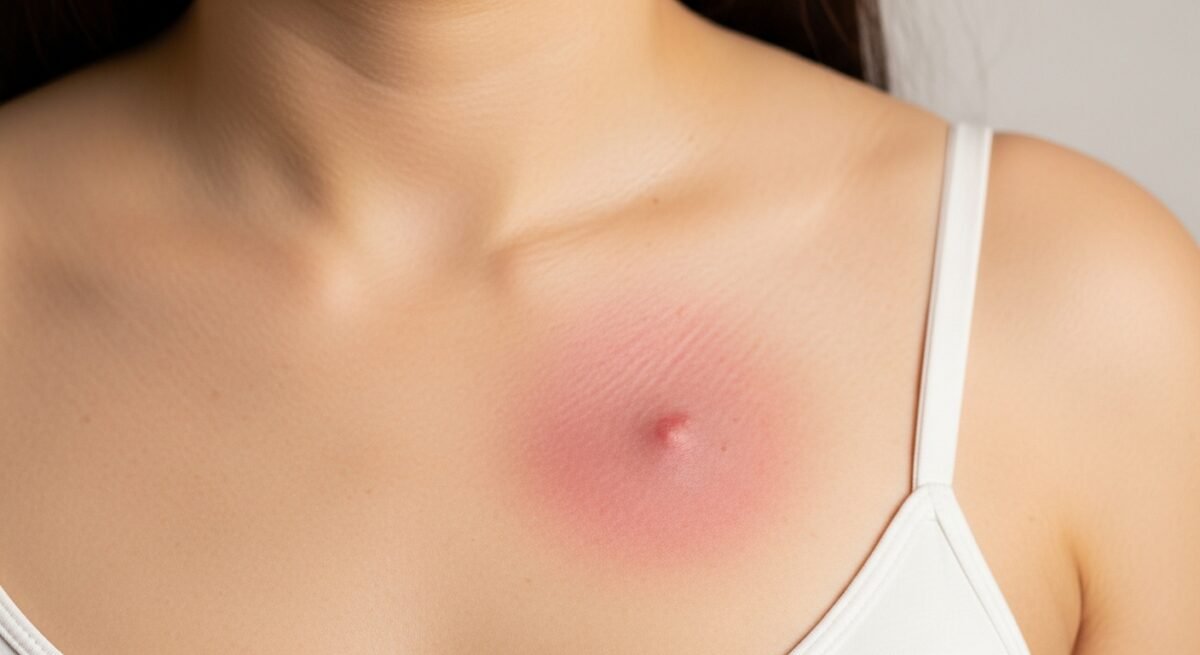
First, the rash causes a noticeable change in the skin’s color and texture. The breast skin may develop a pink, red, or purplish hue. This discoloration often covers at least one-third of the breast. A key sign is peau d’orange, a French term meaning “skin of an orange.” This describes skin that becomes thickened and dimpled, with pores that appear more prominent, mimicking the surface of an orange peel.
Second, the affected breast typically shows rapid and visible swelling. It may feel heavy, warm, and tender to the touch. This swelling can cause a noticeable increase in breast size compared to the other breast. The skin may also feel tight and itchy.
Third, nipple changes are common. The nipple may become inverted (pulled inward) or flattened. There may be crusting, scaling, or a discharge that is not milk.
To help differentiate an IBC rash from other common conditions, consider these critical characteristics:
- Rapid Onset: Changes appear and worsen noticeably over days to weeks, not months.
- Persistent Redness: The discoloration does not fade and is not relieved by topical creams or oral antibiotics prescribed for infection.
- Absence of a Clear Lump: While there may be a thickening of breast tissue, a defined, movable lump is often not present.
- Unilateral Presentation: Symptoms typically affect one breast only, though bilateral cases are possible.
- Associated Swelling and Warmth: The breast is enlarged, firm, and warm, often with persistent tenderness.
It is the combination of these symptoms, their persistence despite first-line treatment for infection, and their rapid progression that forms the clinical picture of early IBC.
Why IBC Is Often Misdiagnosed Initially
The diagnostic challenge with inflammatory breast cancer is profound. Its symptoms mirror those of a breast infection (mastitis) or cellulitis so closely that it is frequently misdiagnosed. A primary care physician or gynecologist may prescribe a course of antibiotics. When the “rash” does not improve after a standard 7 to 10-day antibiotic course, it should be considered a major red flag. This is the critical juncture where insistence on further imaging is essential. For individuals, particularly those on Medicare, understanding your coverage for diagnostic tests like mammograms, ultrasounds, and biopsies is vital to ensuring you can pursue this necessary follow-up without financial delay. Navigating insurance for such urgent care can be complex, but for guidance on finding plans that support comprehensive diagnostic services, you can Read full article.
The Diagnostic Journey: From Rash to Diagnosis
If IBC is suspected, the diagnostic process moves swiftly. A physical exam is the first step, but imaging and tissue sampling are required for confirmation. A diagnostic mammogram and breast ultrasound are usually ordered. However, because IBC may not form a distinct tumor, these images can sometimes appear normal or show only generalized thickening. The definitive diagnosis comes from a biopsy. A core needle biopsy of the skin and underlying breast tissue is performed to obtain a sample. The pathologist looks for cancer cells within the skin and lymphatic vessels. This biopsy confirms not only the presence of cancer but also its type and specific characteristics, such as hormone receptor status (ER/PR) and HER2 status, which are crucial for planning treatment.
Treatment Options for Inflammatory Breast Cancer
Treatment for IBC is aggressive and multimodal, meaning it combines several approaches. It typically begins with neoadjuvant chemotherapy, which is chemotherapy given before surgery. The goal is to shrink the cancer and control any microscopic disease that may have spread. Following chemotherapy, surgery is performed. Due to the skin involvement, a mastectomy (removal of the entire breast) is almost always necessary. After surgery, radiation therapy is administered to the chest wall and nearby lymph nodes to eliminate any remaining cancer cells. Additional treatments depend on the tumor’s biology: hormone therapy for hormone receptor-positive cancers, targeted therapy for HER2-positive cancers, and sometimes additional chemotherapy. The treatment sequence and options are highly personalized and demanding, requiring a dedicated team at a specialist cancer center.
Prognosis and the Importance of Early Detection
The prognosis for IBC has improved significantly with modern multimodal treatment, but it remains more challenging than for many other breast cancers because it is often diagnosed at a locally advanced stage. Survival rates are heavily influenced by how early treatment begins. The five-year survival rate for IBC is lower than for non-inflammatory breast cancers, but it increases markedly when the cancer is diagnosed before it spreads beyond the breast and nearby lymph nodes. This underscores the life-saving potential of recognizing the earliest signs, like that initial rash and swelling. Early detection leads to earlier systemic treatment, which is the key to controlling this aggressive disease.
Frequently Asked Questions
Can a rash on the breast be something other than cancer?
Yes, absolutely. Most breast rashes are caused by benign conditions like eczema, dermatitis, psoriasis, or infection (mastitis). The key is to monitor the rash’s behavior. If it is persistent, worsening rapidly, and not responding to initial treatment, it warrants an immediate specialist evaluation to rule out IBC.
How quickly does inflammatory breast cancer progress?
IBC is known for its rapid progression. Visible changes can occur over a period of weeks. This swift development is why it is classified as a Stage III cancer at diagnosis if it has not metastasized, and why any suspicious symptoms require prompt, not delayed, medical attention.
Is there a lump with inflammatory breast cancer?
Often, there is no discrete, palpable lump. Instead, there may be a diffuse thickening or a sense of fullness in the breast. The primary signs are skin-based: redness, swelling, and warmth.
What should I do if I notice these symptoms?
Do not wait. Schedule an appointment with your doctor immediately, preferably with a breast specialist or gynecologist. Clearly describe the timeline of changes and emphasize if symptoms have worsened quickly. If a course of antibiotics is prescribed and symptoms do not improve, insist on a referral for imaging (mammogram/ultrasound) and a consultation with a breast surgeon or oncologist.
Are there risk factors specific to IBC?
The general risk factors for breast cancer apply, such as being female, older age, and family history. However, IBC tends to occur in younger women more frequently than other breast cancers (average age at diagnosis is in the early 50s) and may be more common in Black women. Obesity is also a noted risk factor.
Vigilance regarding changes in your breast skin is a powerful component of breast health awareness. A very early inflammatory breast cancer rash is a deceptive symptom, but its rapid pace and resistance to simple treatments are its telltale clues. Trust your instincts if something feels profoundly different. Seeking expert evaluation promptly can alter the course of this aggressive disease, opening the door to modern, effective treatments and offering the best possible chance for a successful outcome. Your proactive awareness is the first and most critical step on that path. For a comprehensive look at the full spectrum of this disease, from initial symptoms to advanced treatment options, our guide on inflammatory breast cancer stages and management provides further essential context.
Compare health plans
Finding plans in your area…