
How to Spot Skin Cancer: Recognizing Early Warning Signs
Learn to identify the early visual signs of skin cancer, from changing moles to unusual sores, to enable prompt medical attention and better outcomes.

By Elaine Whitmore
Compare health plans
Finding plans in your area…
Your skin is your body’s largest organ, and like any other part of you, it can be affected by serious health conditions, including cancer. Skin cancer is the most common form of cancer in the United States, with millions of cases diagnosed annually. The good news is that when detected early, most skin cancers are highly treatable and often curable. This makes knowing the visual and tactile signs of skin cancer one of the most powerful tools you have for protecting your health. Early detection hinges on self-awareness and understanding what changes warrant a professional’s attention. This guide will walk you through the critical signs associated with the three main types of skin cancer: basal cell carcinoma, squamous cell carcinoma, and melanoma, providing you with the knowledge to be an active participant in your skin health.
The ABCDEs of Melanoma: Your First Line of Detection
Melanoma is the most dangerous form of skin cancer because of its potential to spread to other parts of the body if not caught early. It develops in the pigment-producing cells called melanocytes. To help the public identify potential melanomas, dermatologists developed the ABCDE rule, a simple yet effective framework for evaluating moles. It’s crucial to remember that not all melanomas will show every sign, and some may show signs not covered by this rule. However, the ABCDEs provide an excellent starting point for self-examination.
Perform regular skin checks in a well-lit room using a full-length mirror and a hand mirror for hard-to-see areas. Look for new growths or existing moles that have changed in appearance. Pay special attention to areas frequently exposed to the sun, such as your face, neck, ears, and arms, but don’t forget your scalp, between your toes and fingers, and even your nails. Melanoma can occur anywhere, even on skin not typically exposed to sunlight.
The following list outlines the five key characteristics of the ABCDE rule. If you notice one or more of these in a mole or spot, schedule an appointment with a dermatologist promptly.
- A is for Asymmetry: One half of the mole does not match the other half. If you were to draw a line through the middle, the two sides would look different.
- B is for Border: The edges are irregular, ragged, notched, or blurred. The pigment may spread into the surrounding skin.
- C is for Color: The color is not uniform. Shades of black, brown, and tan may be present. Areas of white, gray, red, pink, or blue may also appear.
- D is for Diameter: The spot is larger than 6 millimeters across (about the size of a pencil eraser), although melanomas can sometimes be smaller when first detected.
- E is for Evolving: The mole is changing in size, shape, or color. A new symptom, such as bleeding, itching, or crusting, is also a sign of evolution.
In addition to the ABCDEs, be aware of the “Ugly Duckling” sign. This concept highlights a mole that looks distinctly different from all the other moles on your body. It stands out as an outlier in terms of size, color, or texture. Trust your instinct if something looks or feels different. A changing mole is one of the most significant signs of skin cancer requiring evaluation. For a deeper dive into distinguishing between common skin issues and potential cancers, our guide on early warning signs explained offers valuable context.
Signs of Basal Cell and Squamous Cell Carcinomas
While melanoma often gets more attention due to its severity, basal cell carcinoma (BCC) and squamous cell carcinoma (SCC) are far more common. These are known as non-melanoma skin cancers and typically develop on sun-exposed areas like the face, ears, neck, lips, and backs of the hands. They are usually slow-growing and far less likely to metastasize than melanoma, but they still require medical treatment. Left untreated, they can grow deeply, invading local tissues and bones, causing significant damage and disfigurement.
Basal cell carcinoma often appears as a slight, translucent bump. You might see tiny blood vessels within the bump. It can also look like a flat, scaly, flesh-colored or brown patch, similar to a scar, or a sore that repeatedly heals and re-opens. It may itch, bleed easily, or ooze and crust over. Squamous cell carcinoma often looks like a firm, red nodule or a flat lesion with a scaly, crusted surface. It can feel rough to the touch. Both types may be mistaken for a harmless sore, a patch of dry skin, or a stubborn pimple that won’t go away.
The key difference is persistence. A common pimple or dry patch will resolve within a few weeks. A sign of skin cancer, whether BCC or SCC, will remain and often progressively change. It may grow slowly larger, bleed with minimal trauma (like gently toweling dry), or develop a depression (ulcer) in the center. Any spot that fails to heal within three weeks should be examined by a doctor. Understanding your Medicare coverage for such preventive and diagnostic dermatology visits is essential for maintaining skin health without financial worry. You can explore your options to Read full article on health insurance plans that support preventive care.
Less Common but Important Warning Signs
Beyond the classic presentations, skin cancer can manifest in other ways that are important to recognize. Acral lentiginous melanoma, for instance, appears on areas not exposed to the sun, such as the palms of the hands, soles of the feet, or under the nails. It may look like a black or brown streak under a fingernail or toenail, or a dark spot on the palm or sole. Subungual melanoma, a type under the nails, can be mistaken for a bruise (subungual hematoma). A key distinction is that a bruise will grow out with the nail, while melanoma will persist.
Merkel cell carcinoma is a rare but aggressive skin cancer. It usually appears as a fast-growing, painless nodule on sun-exposed skin. The nodule may be red, pink, blue, or purple and can be mistaken for a cyst. Another sign is a sore or lump that bleeds easily and doesn’t heal. Because these cancers are less common, they can be harder to identify, underscoring the importance of having any new, changing, or unusual growth evaluated by a professional.
Furthermore, actinic keratosis (AK) is a crucial precancerous lesion to know. These are rough, scaly patches caused by years of sun exposure. They are considered the earliest stage in the development of SCC. Not all AKs become cancerous, but the risk is significant. They feel like sandpaper and are often easier to feel than see. Treating actinic keratosis is a proactive step in preventing squamous cell carcinoma.
Risk Factors and Proactive Prevention
Knowing the signs is vital, but understanding your personal risk can heighten your vigilance. The primary risk factor for most skin cancers is exposure to ultraviolet (UV) radiation from the sun or artificial sources like tanning beds. A history of sunburns, particularly in childhood, significantly increases risk. Other important risk factors include having fair skin that burns or freckles easily, light-colored eyes, and blonde or red hair. A personal or family history of skin cancer, having many moles (especially atypical ones), a weakened immune system, and older age also contribute to higher risk.
Prevention is always the best medicine. Make daily sun protection a non-negotiable habit. Use a broad-spectrum sunscreen with an SPF of 30 or higher on all exposed skin, even on cloudy days. Reapply every two hours, or more often if swimming or sweating. Seek shade during peak sun intensity hours, typically from 10 a.m. to 4 p.m. Wear protective clothing, including a wide-brimmed hat, sunglasses with UV protection, and long-sleeved shirts and pants when possible. Avoid tanning beds entirely. For individuals on Medicare, it’s worth noting that while routine screening for skin cancer is not typically covered without a symptom or high-risk diagnosis, a diagnostic visit for a suspicious spot is covered under Part B. Exploring Medicare Advantage plans may offer additional benefits that include broader preventive services.
When to See a Doctor and What to Expect
You should schedule an appointment with a dermatologist or your primary care physician if you notice any new, changing, unusual, or concerning growth on your skin. Do not wait. Early evaluation is critical for the best possible outcome. It is helpful to document the spot by taking a dated photo with a ruler for scale to track any changes over time before your appointment.
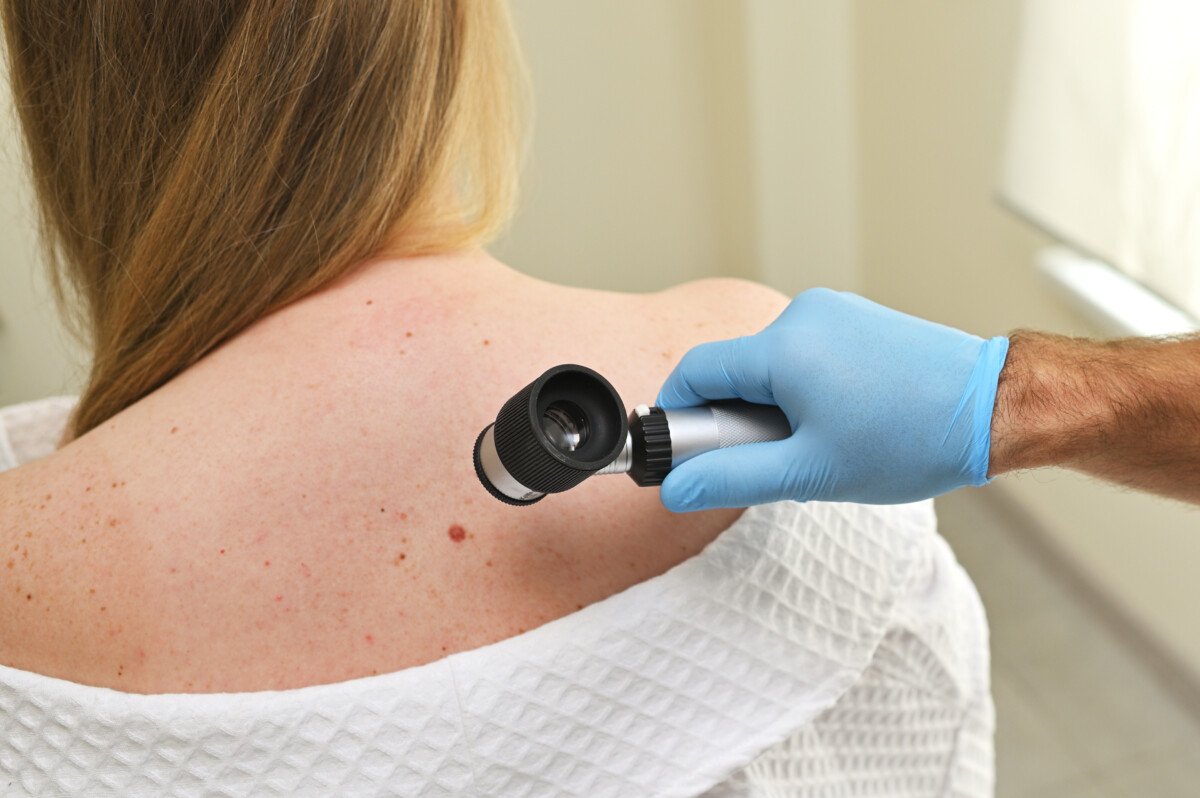
During the visit, the doctor will conduct a full-body skin exam. They will look at the suspicious area, likely with a dermatoscope, a handheld device that magnifies and illuminates the skin, allowing for a more detailed view of structures and pigments. If the lesion appears suspicious, the doctor will recommend a biopsy. This is a simple procedure, usually done under local anesthesia, where a small sample of tissue is removed and sent to a lab for analysis. The biopsy is the only definitive way to diagnose skin cancer. The type of biopsy performed depends on the size, location, and characteristics of the lesion.
If the biopsy confirms skin cancer, your doctor will discuss the type, stage, and treatment options. Treatment is highly effective for early-stage cancers and may include surgical excision, Mohs surgery (a specialized technique for certain skin cancers on the face), cryotherapy (freezing), curettage and electrodesiccation (scraping and burning), topical medications, or, for more advanced cases, radiation therapy.
Frequently Asked Questions
Can skin cancer look like a pimple? Yes, especially in its early stages, basal cell carcinoma can sometimes resemble a pearly pimple or a sore that won’t heal. The key difference is that a cancerous spot will persist for weeks or months, unlike a typical pimple.
Is all skin cancer caused by the sun? While UV exposure is the leading cause, skin cancer can develop in areas never exposed to the sun. Other factors, like genetics, immune suppression, and exposure to certain chemicals or radiation, can also play a role.
How often should I do a self-skin exam? Dermatologists recommend performing a thorough self-exam once a month. This frequency helps you become familiar with your skin’s landscape so you can more easily spot new or changing lesions.
Does a changing mole always mean cancer? Not always. Moles can change over time due to various benign reasons. However, any change, especially one that fits the ABCDE criteria, should be evaluated by a professional to rule out malignancy.
What if I have a lot of moles? Having many moles (more than 50) increases your melanoma risk. It becomes even more important to perform regular self-exams and consider annual professional skin exams. Documenting your moles with photos can be incredibly helpful for tracking.
Your skin is a visible record of your life and health. Learning the signs of skin cancer empowers you to read that record proactively. By incorporating monthly self-exams, daily sun protection, and prompt professional evaluation of anything suspicious, you take control of your skin health. This vigilance, combined with modern medical treatments, means that skin cancer, when caught early, is a battle that can be won. Make skin checks a routine part of your healthcare, just like dental cleanings or annual physicals. Your future self will thank you for the care and attention you invest today.
Compare health plans
Finding plans in your area…