
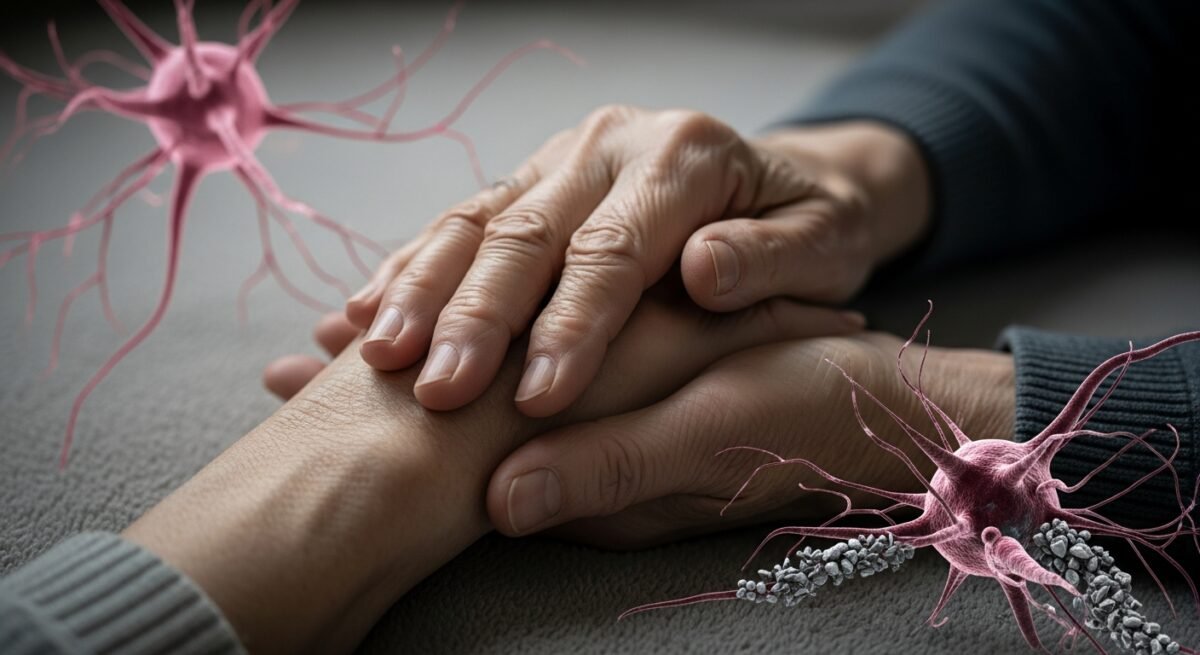
How Alzheimer’s Disease Ultimately Leads to Death: A Detailed Explanation
Alzheimer’s disease leads to death by progressively destroying the brain’s ability to control vital functions like swallowing and breathing, resulting in fatal complications like pneumonia.

By Judith Callahan
Compare health plans
Finding plans in your area…
Alzheimer’s disease, the most common cause of dementia, is often misunderstood as simply a condition of memory loss. While cognitive decline defines its early and middle stages, the ultimate fatal nature of this progressive neurological disorder lies in its systematic dismantling of the brain’s essential functions, eventually leaving the body unable to perform the most basic life-sustaining tasks. Understanding the pathway from diagnosis to death is crucial for patients, families, and caregivers to grasp the profound physical toll of this disease and plan for appropriate end-of-life care. This journey is not a direct result of the disease itself, but rather a cascade of failures it triggers within the brain and body.
The Core Problem: How Brain Damage Disrupts Vital Systems
Alzheimer’s disease leads to death through a multi-stage process that begins with microscopic changes in the brain. The hallmarks of the disease are amyloid plaques (clumps of protein fragments) and neurofibrillary tangles (twisted strands of another protein called tau). These abnormalities disrupt communication between neurons, cause inflammation, and eventually lead to widespread brain cell death and tissue shrinkage (atrophy). This atrophy is not random, it follows a predictable pattern, starting in regions involved in memory and gradually spreading to areas that control every fundamental aspect of human function.
The hippocampus, crucial for forming new memories, is often the first casualty. As the disease marches forward, it attacks the cerebral cortex, responsible for language, reasoning, and social behavior. Ultimately, it reaches and destroys the brainstem, which regulates automatic functions we never think about, like breathing, heart rate, and swallowing. It is this relentless invasion of the brain’s command centers that sets the stage for fatal complications. The brain, in essence, loses its ability to run the body’s operating system.
The Primary Causes of Death in Advanced Alzheimer’s
In the final stages of Alzheimer’s, individuals become profoundly disabled and completely dependent on caregivers. Death rarely occurs from “Alzheimer’s disease” listed as a single cause on a death certificate. Instead, it is the result of specific complications that arise because the brain can no longer coordinate or initiate essential bodily functions. The most common immediate causes of death are directly linked to this neurological failure.
Aspiration Pneumonia: The Most Common Culprit
Perhaps the single most frequent direct cause of death in Alzheimer’s patients is aspiration pneumonia. This occurs when food, liquid, saliva, or stomach contents are inhaled into the lungs instead of being swallowed safely into the esophagus. The brain’s damage severely impairs the complex swallowing reflex (dysphagia). Muscles become weak and uncoordinated, and the person may lose the sensation that something has “gone down the wrong pipe.” Inhaled materials introduce bacteria into the lungs, leading to a severe infection. Because the individual is often frail, bedridden, and has a weakened immune system, the body cannot fight off this infection, leading to respiratory failure. This risk is compounded by a reduced ability to cough effectively to clear the airways.
Infections and Sepsis
Beyond pneumonia, other infections become major threats. Urinary tract infections (UTIs) are common due to incontinence and the use of catheters. As immobility increases, pressure ulcers (bedsores) can develop and become severely infected. Any of these localized infections can escalate into sepsis, a life-threatening systemic inflammatory response where the body’s attempt to fight infection causes widespread organ damage. The confused and non-communicative state of advanced Alzheimer’s often means infections are detected late, when they are already severe and harder to treat.
Cardiovascular Events and General Physical Decline
The brain’s role in regulating the cardiovascular system can also be compromised. Furthermore, the extreme physical decline associated with late-stage Alzheimer’s contributes to fatal events. Individuals experience severe weight loss and muscle wasting, partly due to eating difficulties but also because the brain’s regulation of metabolism is impaired. This state of cachexia (wasting syndrome) leaves the body with no reserves to combat illness. Dehydration and malnutrition are constant risks. The combination of immobility, dehydration, and changes in blood coagulation can also increase the risk of fatal blood clots, such as pulmonary embolisms. Understanding the factors that contribute to brain health is a key part of a holistic approach, as explored in our guide on Alzheimer’s disease risk factors.
The Role of Coexisting Conditions and Frailty
Alzheimer’s disease does not exist in a vacuum. Most individuals diagnosed are older adults who may have other chronic health conditions, such as heart disease, chronic obstructive pulmonary disease (COPD), diabetes, or kidney disease. Alzheimer’s complicates the management of these conditions. A patient may forget to take medications, be unable to report symptoms like chest pain, or resist necessary medical care. The profound stress and physical burden of advanced dementia can also exacerbate these underlying conditions, making them more likely to become fatal. The person becomes increasingly frail, a state of heightened vulnerability where even a minor illness, like a common cold, can lead to a rapid downward spiral and death.
The Timeline and Progression to End-Stage
The progression from diagnosis to death in Alzheimer’s disease varies significantly, typically ranging from 4 to 8 years on average, though it can be as short as 3 or as long as 20 years. The final stage, often called late-stage or end-stage Alzheimer’s, can last from several weeks to several years. In this stage, the individual requires round-the-clock care. Key indicators that the disease is entering its terminal phase include:
- Loss of the ability to communicate coherently
- Inability to walk, sit up, or hold up one’s head independently
- Requiring assistance for all activities of daily living (bathing, dressing, toileting)
- Significant difficulty eating and swallowing
- Increased time spent sleeping
- Vulnerability to infections, particularly pneumonia
During this time, the focus of care shifts from attempting to slow cognitive decline to providing comfort, preserving dignity, and managing symptoms. This is where hospice care, a specialized type of care for people with a terminal illness, becomes highly relevant. Hospice teams are experts in pain management, managing breathing difficulties, and providing psychosocial and spiritual support for both the patient and their family.
Frequently Asked Question Section
Is death from Alzheimer’s painful?
The goal of end-of-life care, especially with hospice involvement, is to ensure the patient is as comfortable and free from pain as possible. While the complications like infections can cause discomfort, medical professionals can effectively manage pain, shortness of breath, and agitation with appropriate medications and care techniques.
Can you die from Alzheimer’s disease itself?
Technically, no. Alzheimer’s destroys brain cells, but you do not die from the cell loss alone. You die from the catastrophic failure of bodily systems (like breathing and swallowing) that the brain once controlled, leading to the complications described above.
What are the final days like?
In the final days, a person often becomes unresponsive. Vital signs change, breathing may become irregular (Cheyne-Stokes respirations), hands and feet may feel cool, and the person may stop eating and drinking entirely. This is a natural part of the body shutting down. Care focuses on keeping the person clean, positioned comfortably, and ensuring they are not in pain.
How do I know when to call hospice?
A doctor typically certifies that a patient is eligible for hospice if they have a life expectancy of six months or less, based on the progression of the disease (e.g., unable to walk, significant difficulty swallowing, recurrent infections). It is often better to involve hospice earlier rather than later to maximize support.
Does Alzheimer’s lead to death faster than other dementias?
The progression rate varies. Some studies suggest Alzheimer’s may have a somewhat shorter average survival time after diagnosis compared to some other dementias like vascular dementia, but individual variation is enormous and depends on age, overall health, and other factors.
Grasping how Alzheimer’s disease leads to death underscores the critical importance of advanced care planning. Having conversations early about care preferences, including decisions about life-prolonging interventions versus comfort-focused care, can provide immense relief and guidance for families during an incredibly difficult time. While the journey is profoundly challenging, understanding the biological and medical realities empowers caregivers to seek the right support, from specialized medical care to hospice services, ensuring the final chapter is met with compassion, dignity, and the utmost focus on comfort.
To discuss early evaluation or new treatment options, contact 📞833-203-6742 or learn more at Learn About Treatment Options.
Compare health plans
Finding plans in your area…