Does Medicare Cover Durable Medical Equipment?
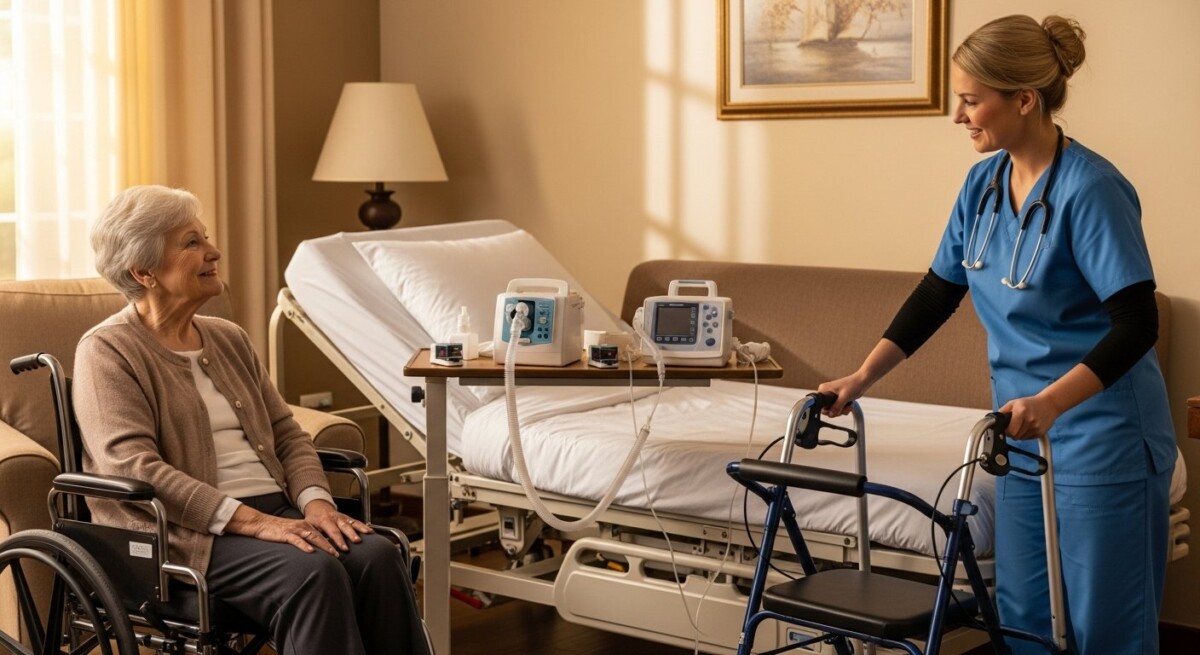
When your doctor prescribes a wheelchair, walker, or hospital bed for home use, a pressing question arises: does Medicare cover durable medical equipment? The answer is yes, but only under specific conditions. Medicare Part B helps pay for medically necessary equipment that your doctor orders for use in your home. However, navigating the rules around suppliers, costs, and coverage criteria can feel overwhelming. This guide breaks down exactly what qualifies, what you will pay, and how to avoid surprise bills so you can focus on your recovery.
What Is Durable Medical Equipment Under Medicare?
Durable medical equipment (DME) refers to devices that serve a medical purpose, can withstand repeated use, and are appropriate for use in the home. Medicare defines DME as equipment that is durable, used for a medical reason, and not useful to a person without an illness or injury. Common examples include oxygen equipment, hospital beds, wheelchairs, walkers, and CPAP machines.
Medicare also covers certain supplies needed to operate the equipment, such as tubing for oxygen or test strips for blood glucose monitors. But does Medicare cover durable medical equipment that is primarily for convenience or comfort? Generally no. Items like air conditioners, exercise equipment, or grab bars in the shower are not considered DME because they do not meet Medicare’s strict definition of medical necessity.
Key Criteria for DME Coverage
For Medicare to cover a piece of equipment, three conditions must be met. First, your doctor or other treating provider must prescribe the equipment as medically necessary for your condition. Second, the equipment must be durable, meaning it can withstand repeated use. Third, it must be used primarily in your home, not in a hospital or nursing facility where you are a resident.
Medicare also requires that you use a supplier enrolled in the Medicare program. If you buy or rent equipment from an unenrolled supplier, Medicare will not pay for it. You may also need to use a supplier that participates in Medicare’s Competitive Bidding Program for certain items like oxygen and power wheelchairs. This program sets payment amounts in specific areas to control costs.
Costs: What You Will Pay for DME
Once you confirm that your equipment qualifies, the next question is cost. Under Original Medicare (Part B), you pay 20 percent of the Medicare-approved amount after you meet your annual Part B deductible. In 2026, the Part B deductible is $233 per year. So if a wheelchair costs $1,000 and Medicare approves $800, you pay $160 plus the deductible if it has not been met.
If you have a Medicare Advantage plan, your costs may differ. These plans must cover the same DME as Original Medicare, but they can charge different copays and coinsurance. Some Advantage plans have network restrictions, meaning you must use in-network suppliers to get the lowest cost. Always check with your plan before ordering equipment.
Medigap policies can help reduce your out-of-pocket costs. For example, Medigap Plan G covers the Part B coinsurance for DME after you pay the Part B deductible. If you have both Medicare and Medicaid, you likely pay little to nothing for covered DME. For a deeper look at how different plans handle costs, see Does Medicare Cover Wheelchair Ramps Understanding Your Options, which explains similar cost-sharing rules for home accessibility equipment.
How to Get Medicare to Cover Your DME
Getting coverage starts with a prescription from your doctor. The prescription must state the specific equipment needed and the medical reason for it. For example, if you need a walker after hip surgery, your doctor must document that you have difficulty walking and that a walker will help prevent falls.
Next, find a Medicare-enrolled supplier. You can search for suppliers on Medicare.gov or call 1-800-MEDICARE. When you call a supplier, ask if they accept assignment. Acceptance means the supplier agrees to charge no more than the Medicare-approved amount. This protects you from balance billing, where the supplier charges you the difference between their price and what Medicare pays.
If you are renting equipment, such as a hospital bed or oxygen concentrator, Medicare pays a monthly rental fee for up to 13 months. After that, you may own the equipment, depending on the type. For items like wheelchairs, Medicare typically pays for purchase outright if the equipment is expected to be used long-term. Your supplier will handle the billing to Medicare, but you should always verify that they submitted the correct paperwork.
Common DME Items and Their Coverage Status
Not all equipment is treated equally. Below is a list of commonly prescribed DME items and whether Medicare covers them, along with special rules you should know.
- Wheelchairs and scooters: Covered if you cannot walk safely in your home. Medicare requires a face-to-face exam with your doctor and a written prescription. Power wheelchairs have stricter medical necessity rules.
- Hospital beds: Covered if your condition requires the bed to be adjusted for medical reasons, such as to elevate your head for breathing or to change positions to prevent bedsores.
- Oxygen equipment: Covered if you have severe lung disease and your blood oxygen level drops below a certain threshold. Medicare pays a monthly rental for the concentrator and covers the cost of supplies like tubing.
- CPAP and BiPAP machines: Covered for sleep apnea after a sleep study confirms the diagnosis. Medicare requires a three-month trial of CPAP before covering the machine long-term.
- Walkers and canes: Covered if your doctor prescribes them for stability. No special prior authorization is needed for standard walkers, but rollators may require more documentation.
If you need equipment for a condition like migraines, you may wonder if devices such as Botox injections or nerve stimulators are covered. While Botox is a drug, not DME, similar medical necessity rules apply. For more on that topic, read Does Medicare Cover Botox for Migraines Understanding Your Coverage Options.
Special Situations: Rental vs. Purchase and Competitive Bidding
Medicare uses different payment methods depending on the type of equipment. For most DME, you have the option to rent or buy. Medicare’s default rule is to purchase equipment that costs more than $150, unless it is an item that is rarely purchased, such as a ventilator. For oxygen equipment, Medicare requires a 36-month rental period, after which you own the concentrator. For hospital beds and wheelchairs, Medicare pays a monthly rental for up to 13 months, then you own the equipment.
Competitive bidding affects prices in certain regions. Medicare sets a maximum payment amount for items like oxygen, power wheelchairs, and diabetic supplies. If you live in a competitive bidding area, you must use a contract supplier. Using a non-contract supplier means Medicare will not pay, and you will be responsible for the full cost. You can check if your area is affected by visiting Medicare.gov or asking your supplier.
Emergency transportation, such as air ambulances, falls under a separate benefit category but shares similar supplier rules. To understand how coverage works for life-threatening situations, see Does Medicare Cover Life Flight Understanding Your Coverage Options. That guide explains when Medicare pays for air transport and what documentation is needed.
What to Do If Medicare Denies Your DME Claim
If Medicare denies coverage for your equipment, you have the right to appeal. The first step is to read the denial notice, called a Medicare Summary Notice (MSN). It will list the reason for denial, such as lack of medical necessity or missing paperwork. You have 120 days from the date of the MSN to file an appeal.
Start by asking your doctor to submit a letter of medical necessity that explains why the equipment is essential for your treatment. You can also request a redetermination from the Medicare Administrative Contractor (MAC) that processes your claims. If that is denied, you can escalate to a hearing before an administrative law judge.
For individuals with dementia who need assisted living services, equipment like hospital beds or lift chairs may be part of a broader care plan. However, Medicare generally does not cover assisted living itself. For information on how Medicare interacts with dementia care, see Does Medicare Pay for Assisted Living for Dementia Understanding Coverage Options.
Frequently Asked Questions
Does Medicare cover durable medical equipment for home use only?
Yes, Medicare covers DME only when it is used in your home. If you need equipment for use outside the home, such as a wheelchair for travel, Medicare may not cover it unless you also need it inside your home. The home can be your private residence, a relative’s home, or an assisted living facility, but not a hospital or skilled nursing facility where you are a resident.
Do I need prior authorization for DME?
For most DME, prior authorization is not required, but your doctor must provide a written order. However, for certain items like power wheelchairs and oxygen, Medicare requires a face-to-face examination and a detailed written order before delivery. Some Medicare Advantage plans require prior authorization for all DME, so check with your plan.
Can I buy used DME and get Medicare to pay?
Medicare will pay for used DME only if the supplier is enrolled in Medicare and the equipment meets current safety standards. The supplier must also provide a warranty and ensure the equipment is in good working condition. You cannot buy used equipment from a private seller and expect Medicare to reimburse you.
What happens if my supplier does not accept assignment?
If your supplier does not accept assignment, they can charge you up to 15 percent more than the Medicare-approved amount. This is called a limiting charge. You are responsible for paying the extra amount. To avoid this, always ask if the supplier accepts assignment before you order equipment.
Final Thoughts on DME Coverage
Understanding whether Medicare covers durable medical equipment starts with knowing the rules around medical necessity, approved suppliers, and your specific plan. By getting a clear prescription from your doctor, choosing an enrolled supplier that accepts assignment, and checking your benefits in advance, you can minimize out-of-pocket costs and avoid claim denials. If you face a denial, remember that appeals are available and your doctor’s documentation is your strongest tool. With careful planning, you can get the equipment you need to recover safely at home.